Mobile VPN
Its own node network, its own backend and an app with a built-in encrypted messenger
What it gave the business
The product depends on nobody: traffic goes through its own nodes, the subscription sells in the store, conversations stay inside the app. No intermediary that can switch it off, no third-party platform that takes the audience.
The problem
The ask was a VPN of its own rather than a layer over someone else's service: own infrastructure, an own store client, and messaging that does not leave the product.
My role
Everything: the node network, the server side with provisioning and subscriptions, the mobile app and the built-in messenger.
What was built
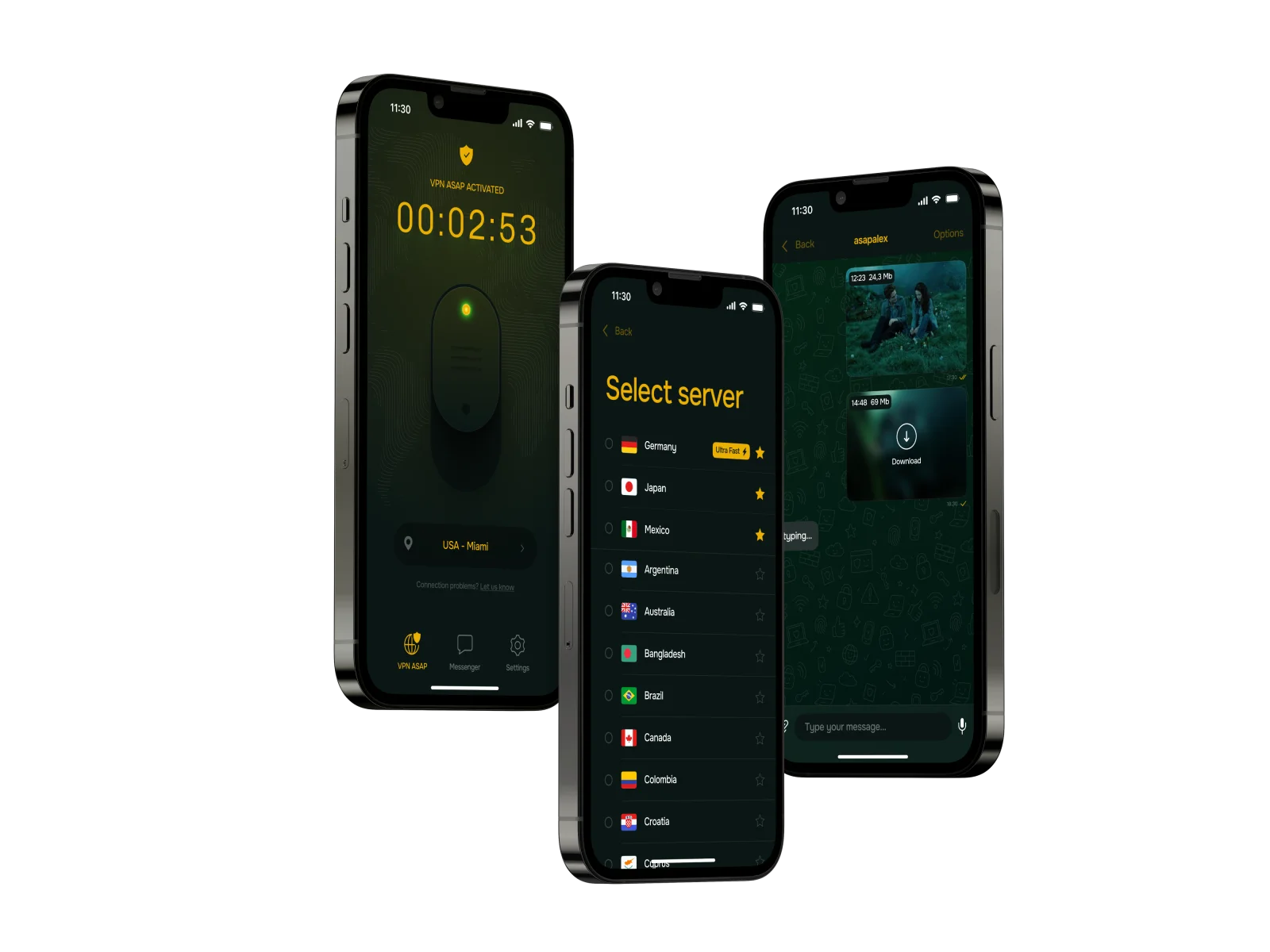
- An own node network: access is provisioned automatically, the server is picked from a country catalogue
- The home screen is one connect button, a session timer and the current location
- A server catalogue with speed marks and favourites
- A built-in end-to-end encrypted messenger: text, media and attachments
- The subscription is bought inside the app and access opens right after payment
The engineering core
A whole product in one pair of hands: nodes, the server side with provisioning and subscriptions, the app and the messenger were built for one job and fit together without glue layers. End-to-end encryption is part of the client, not a separate service bolted on.
Stack
Tell me about your project
I will tell you how long it takes and what it costs before any work starts. If it is not my kind of task, I will say so right away and point you elsewhere if I can.
Message on Telegram